DuSpec
A baseline of research to inform the redesign of DuSpec’s paint specification platform
Role Client Timeframe
CX Lead DuluxGroup 2 weeks
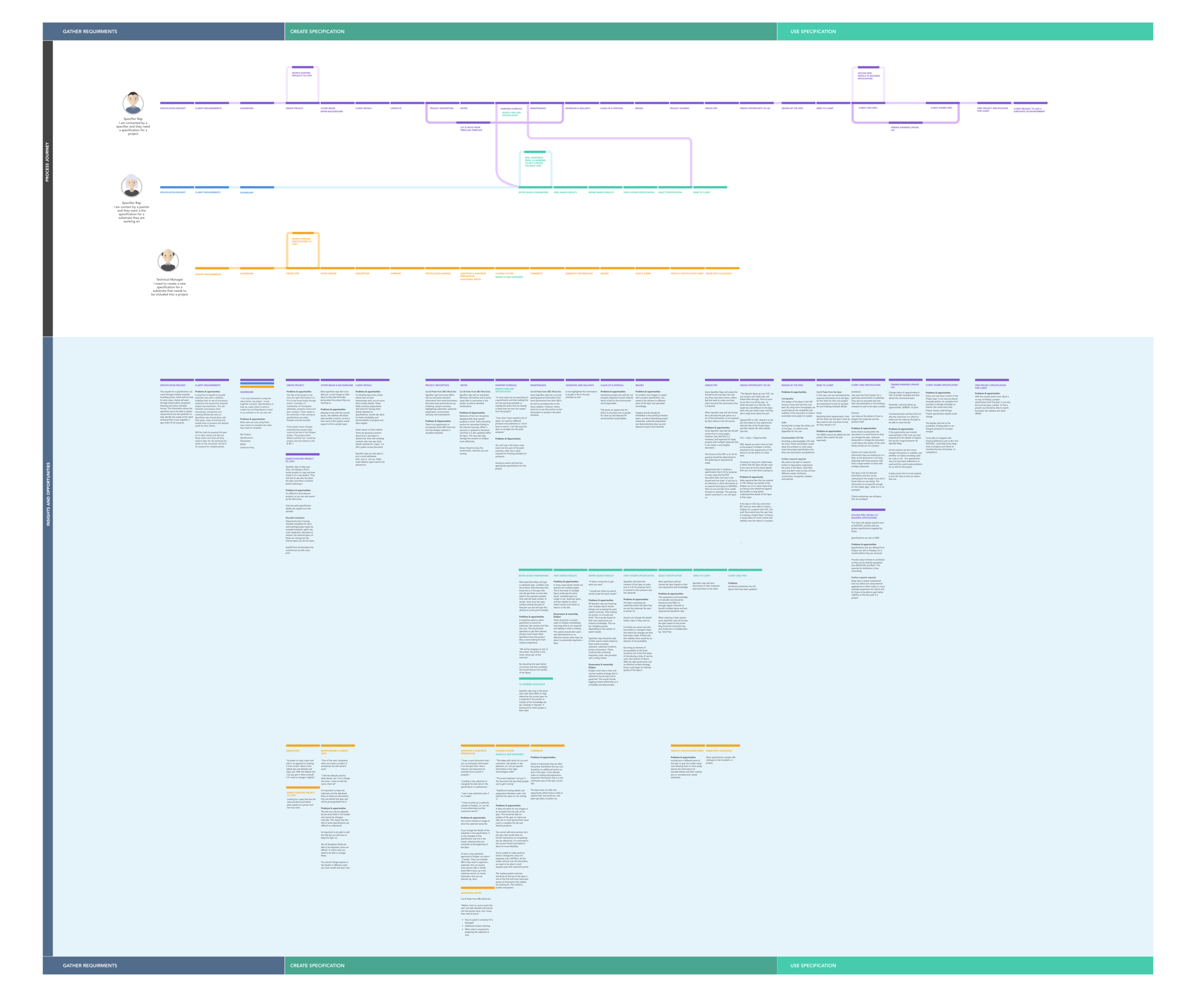
Yes I know, it’s rather large
DuSpec is an online paint and coatings specification tool. It allows the Dulux employee to view safety datasheets, product specifications and coating systems for substrates. It also allows users build a project specification document with Dulux products. I was asked to put together an Experience Blueprint which would build out a baseline of research to understand the users of DuSpec.
Challenge
DuSpec is looking to understand their users with the intent to build a deeper connected relationship with their customers, across the purchasing and maintenance journey. The journey map will identify the goals users are trying to achieve and the tasks they are trying to complete, whilst identifying pain points and opportunities along the way.
Process
Below is a high-level overview of what my the design process looked like for this project.
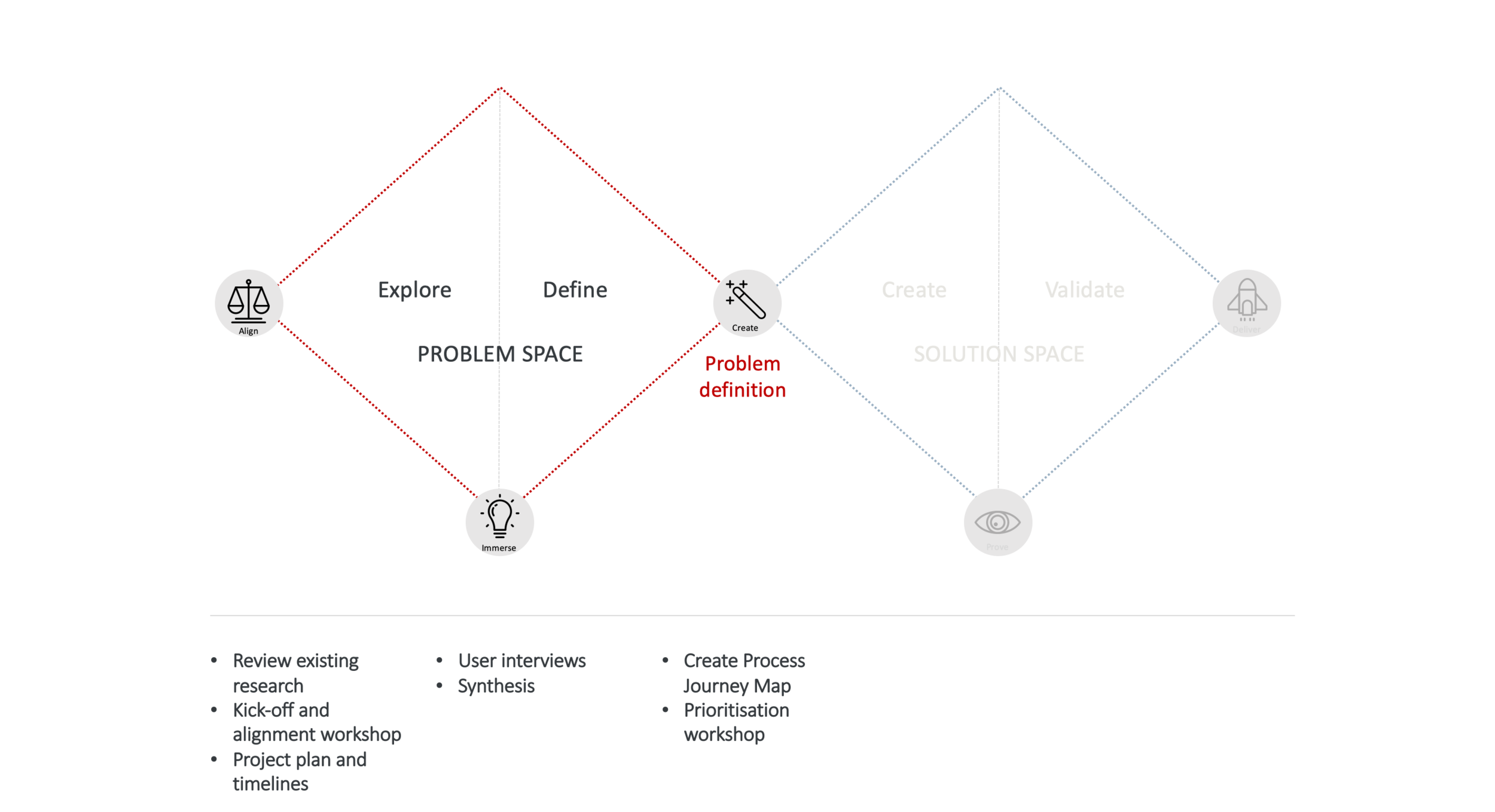
Kick-off & alignment workshop
The purpose of the workshop was to align all stakeholders on the goals of the project and to understand the design process. I also wanted to know what were the top tasks that users are trying to complete when using the DuSpec system and how they put together a specification document. We also reviewed the current research and any emerging themes.
Usability testing and Synthesis
Participants
9 Dulux Specifier Reps
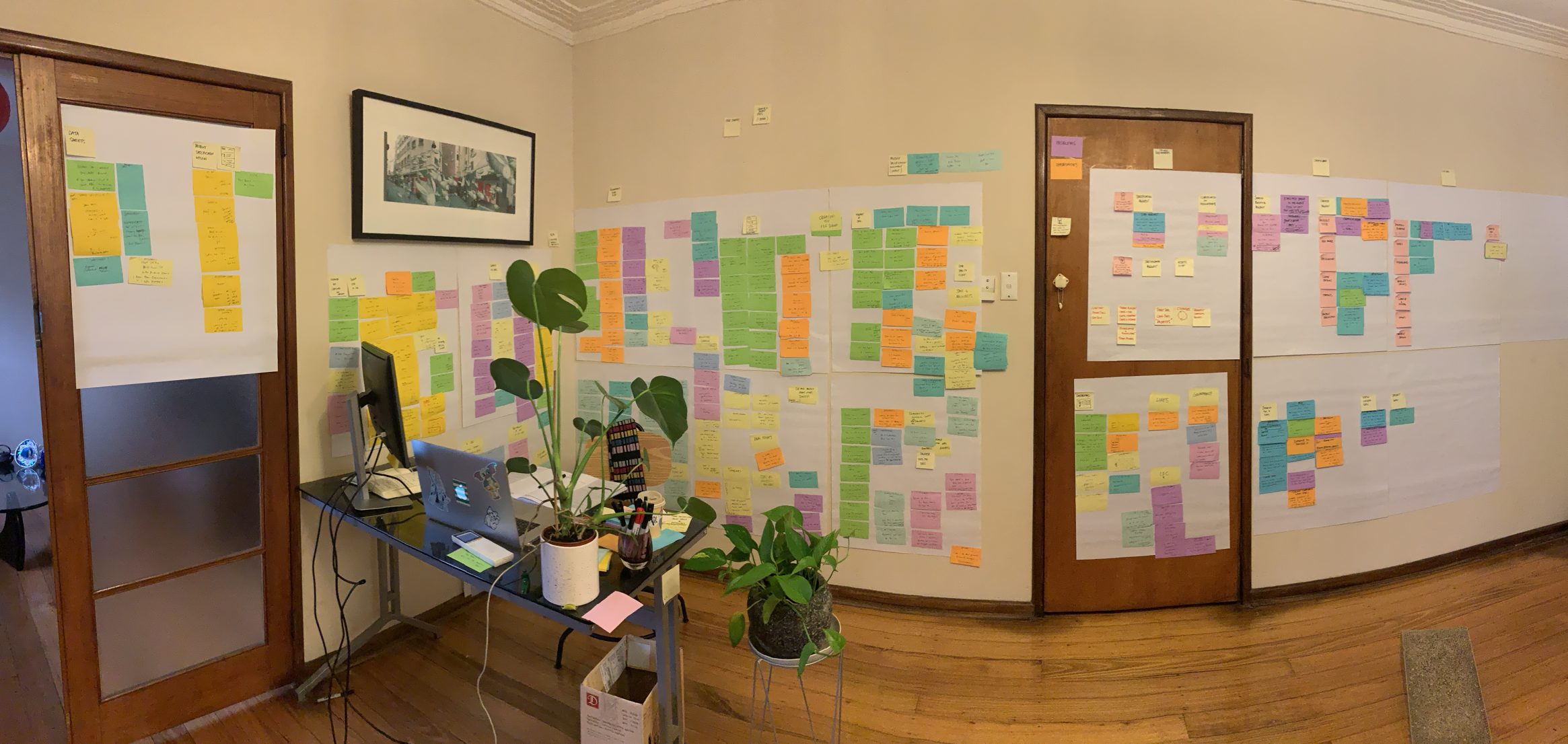
Through detailed and thorough questioning I was able to gather information on what the key tasks were that Specifiers were trying to complete when using DuSpec, their pain points and any identified opportunities. Many of the problems experienced were the result of basic design and usability flaws.
Key insights
Users are having difficulties with the searchability and findability of Specification documents (spec’s)
There are a lot of duplicate spec’s, out of date spec’s and spec’s with incorrect information
There is no governance over DuSpec
There is no content strategy for DuSpec
Most users have the freedom to change spec’s and there is no visibility to show where changes have been made and by who
There are many Project Spec’s on DuSpec, also with no visibility, showing what stage they are at
There’s a breadth of industry experience amongst Dulux Specifier Rep’s
Process Journey’s & Highlights
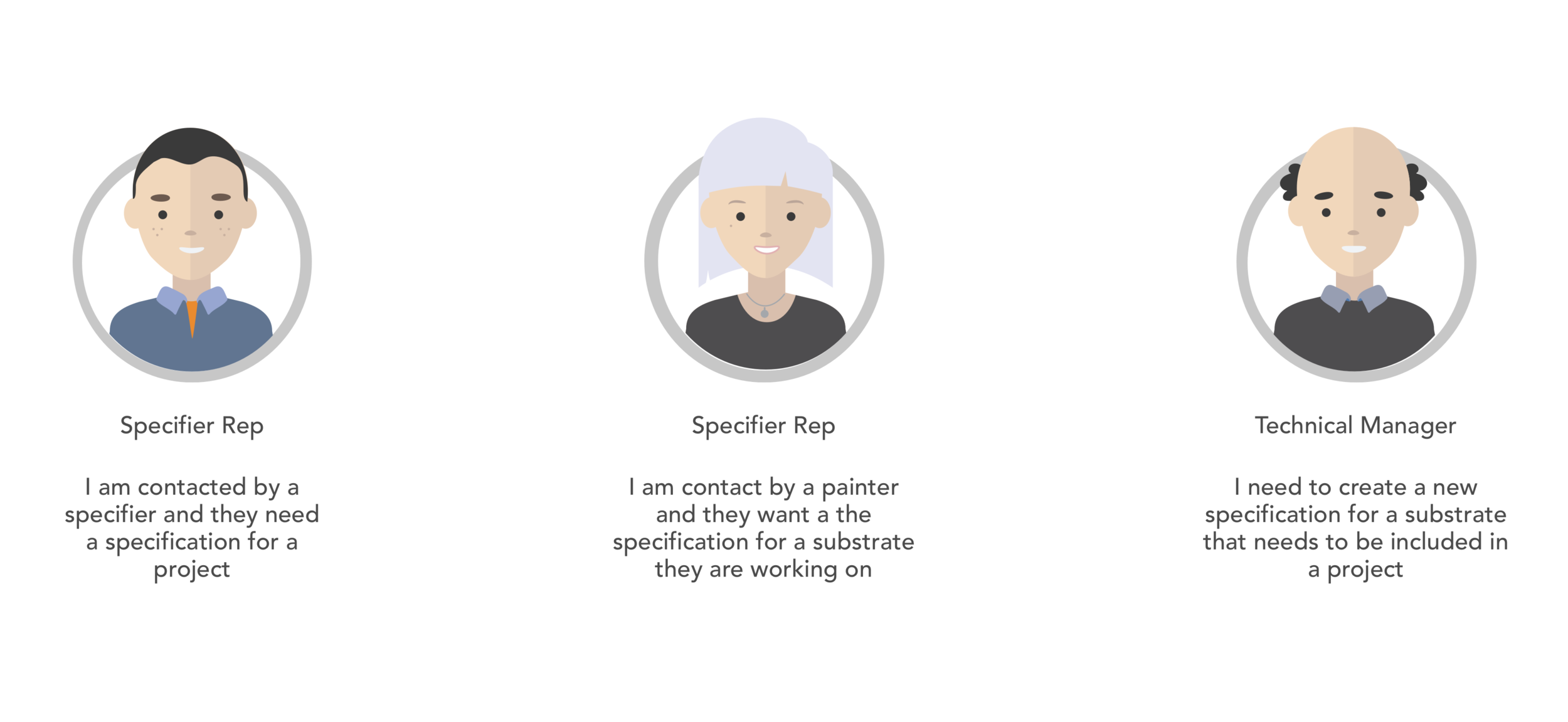
These are the three key scenarios that are being played out for users of DuSpec.
Create Specification phase
Finding a suitable Spec for a project
Pain points & opportunities
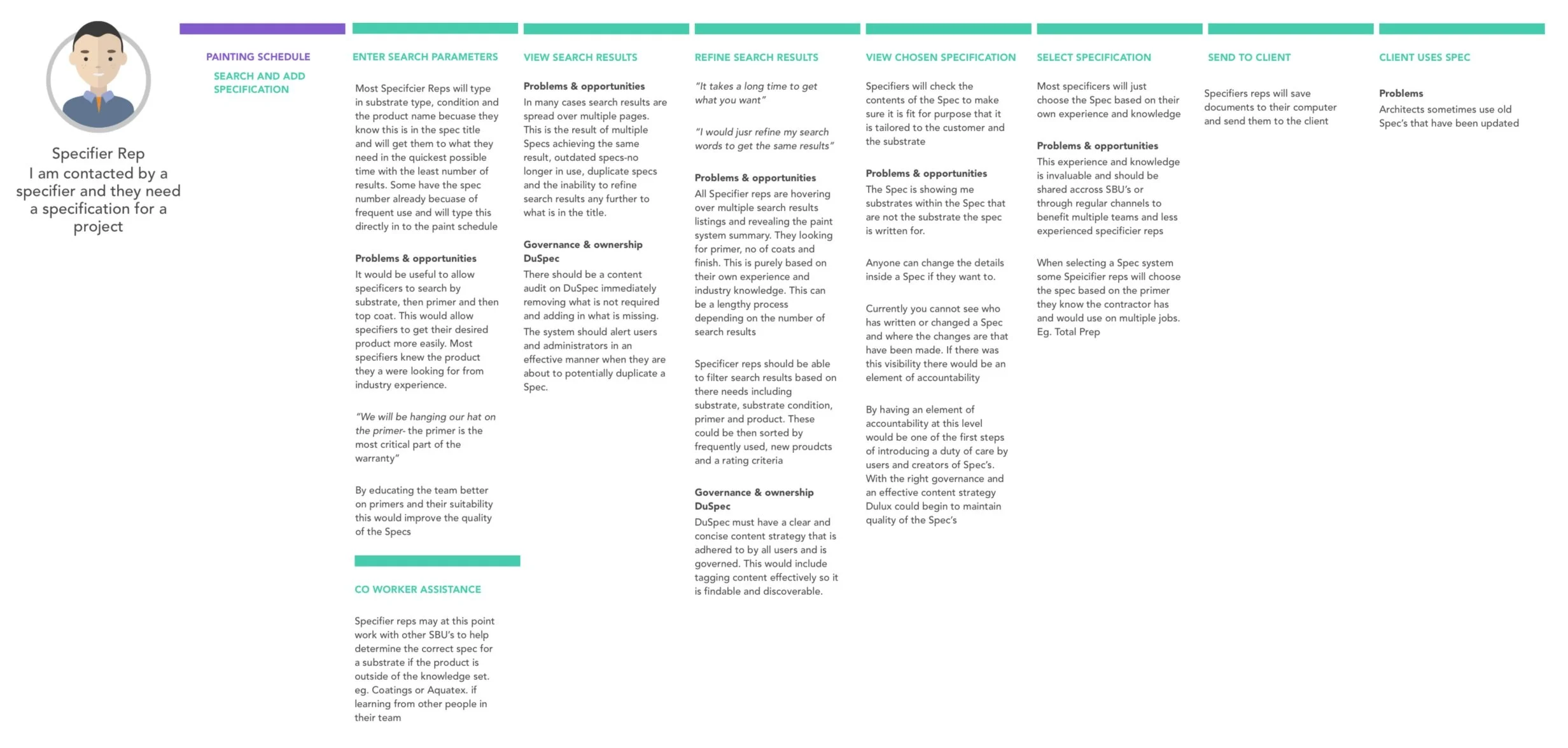
Specifier’s will choose a Specification based on their own experience and knowledge. Not all Specifiers have this, it is developed over time.
Specifiers usually know what top coat they’ll recommend for a particular substrate (concrete, wood etc). What they’re looking for is a suitable Spec. – A primer that can be applied to the substrate that is suitable for the top coat.
The most critical part of the Dulux Paint Warranty is the suitability of the primer for the substrate.
Search results yield Spec’s over many pages. Many spec’s are unsuitable, incorrect, out of date and duplicated.
Recommendations
Allow Specifier’s to search by substrate, then primer and then top coat. This would allow Specifiers to get their desired product more easily.
By educating the Specifiers better on primers and their suitability, this would improve the quality of the Specs
More experienced Specifiers knowledge is invaluable and should be shared across the organisation to benefit multiple teams and those less experienced
DuSpec content audit - Develop a robust, clear and concise content strategy and governance process.
Use Specification phase
After the Specification document has been compiled who is using it and how are they using it
Problem
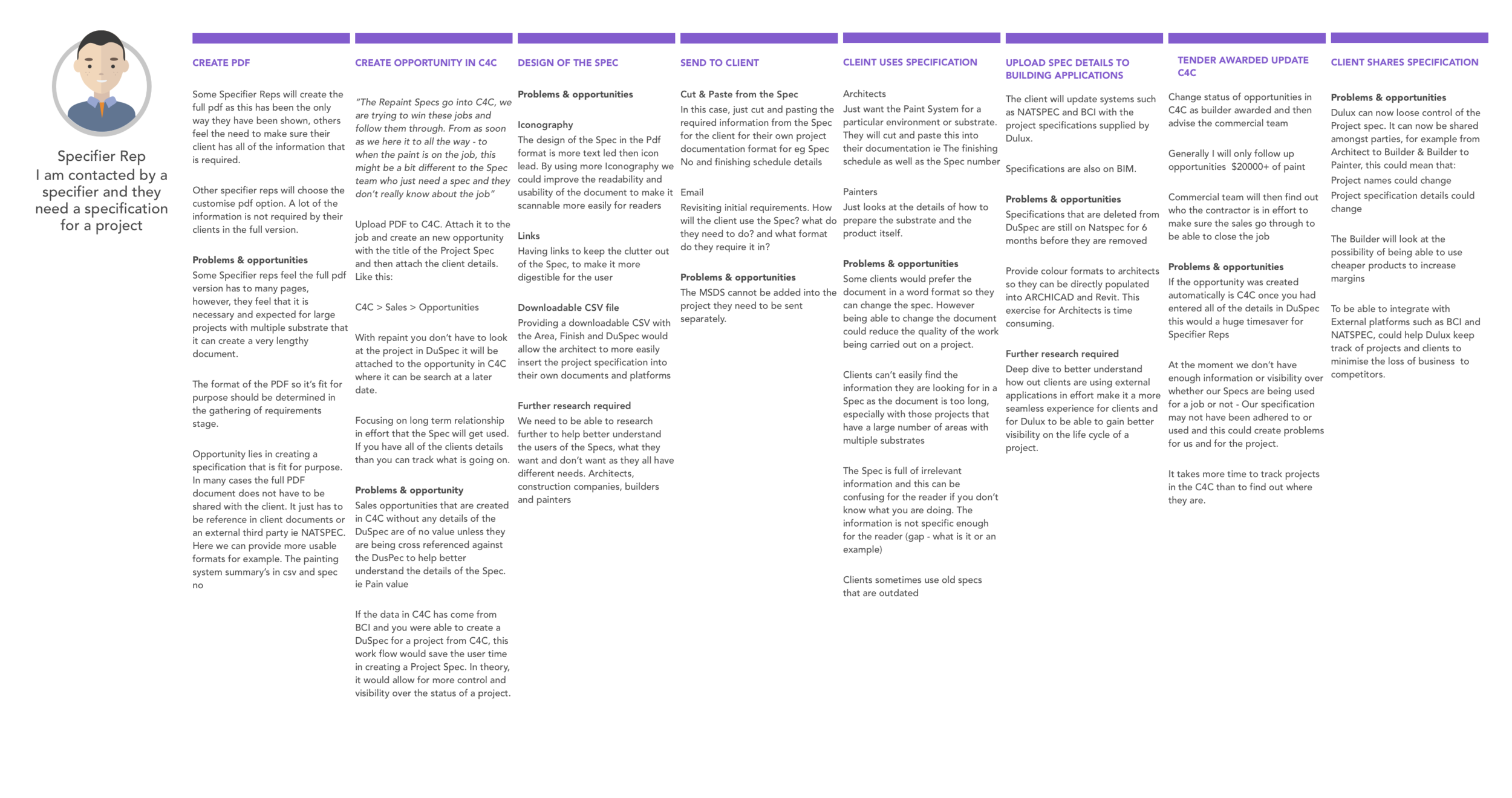
Specifier Reps feel the project specification document is too long and is not read in it’s entirety by clients. It is very text heavy and difficult to find the information that different readers are looking for.
Architects only want the Paint System for a particular substrate. They have to cut and paste this information from the PDF into their own finishing schedule.
Specification document details are uploaded to other building applications and the specification can change over time depending on requirements at different phases of a project.
Dulux have no visibility over the lifecycle of a Project Spec once it has been passed on to the client.
Recommendations
Allow Specifiers to create Project Specifications that are fit for purpose including but not limited to usable formats – The paint system summary in CSV
Further research is required with architects, construction companies, builders and painters to help better understand their goals and needs related to the project Specification document
Integration with external and internal Project Management platforms such as BCI and NATSPEC could help Dulux keep track of a project allowing the commercial sales team to generate more revenue
Provide colour formats to architects so they can be directly populated into ARCHICAD and Revit. This exercise for Architects is time consuming.
Prioritisation Workshop
I conducted a prioritisation workshop with stakeholders using a User Desirability Matrix. The allowed stakeholders to prioritise the identified problems and opportunities of highly desirable to least desirable. The larger green post it’s would be solved in the first phases, orange was nice to have, yellow was out of scope and blue was a parking lot of unrelated issues.
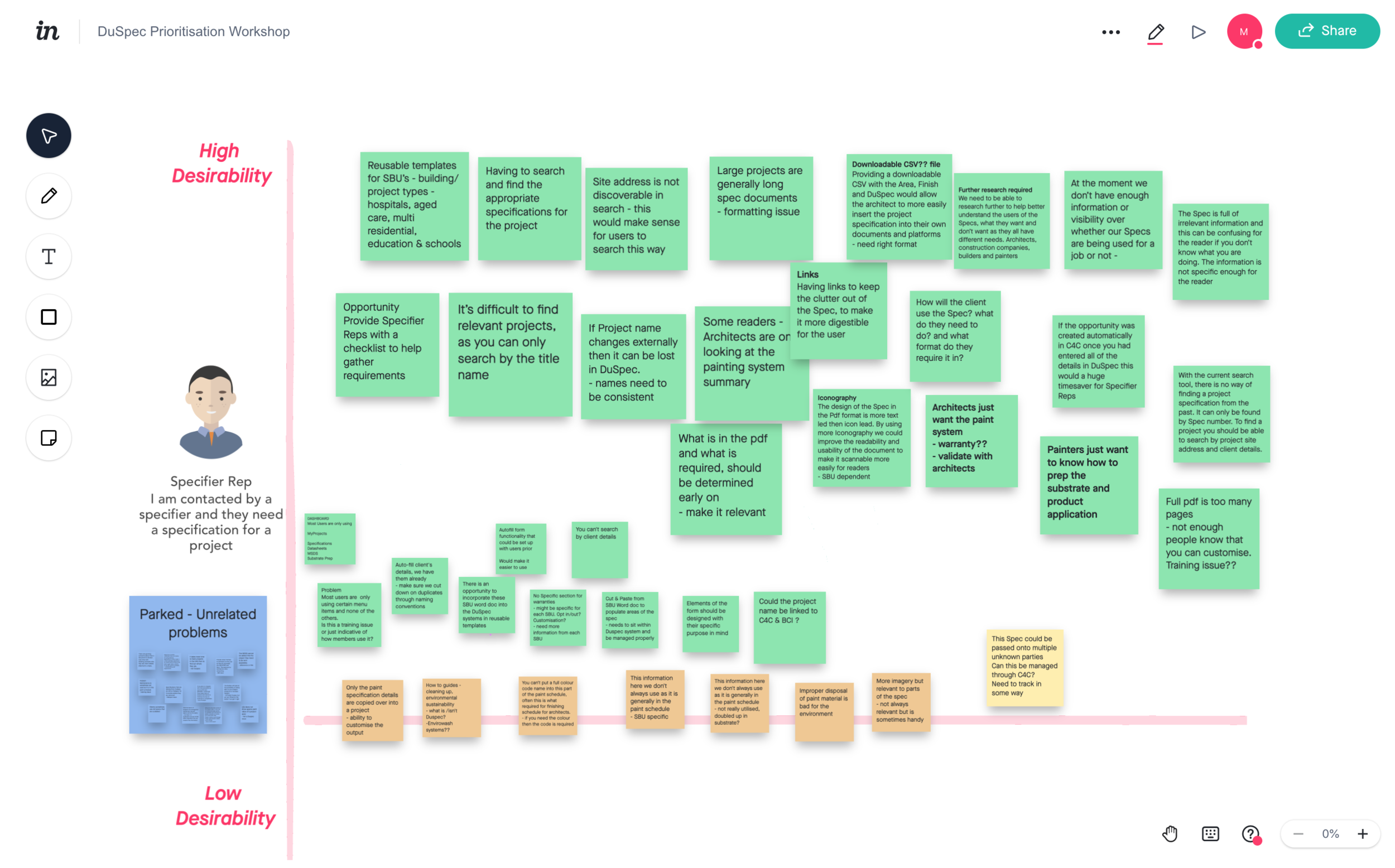
Typically these priotisation workshops are done face to face. This was the first time I had conducted a workshop like this remotely, it went well! I used Freehand by Invision you can check it out here.
Outcome
The discovery phase of this project required me to deliver a High Level Process Journey Map with insight driven problems and opportunities produced as a giant poster, allowing Dulux to be able interact with it and build upon over time. The prioritisation workshop would then help Dulux to focus on high value problems and opportunities for more research and to begin ideation in the design phases of the project.